Showing posts with label flooding. Show all posts

Wednesday, September 10, 2008

Rain barrels help counter drought, water shortage


(Photo of rain barrels from Flickr and photographer fireballsedai)

News Update: What can you do to help conserve an increasingly scarce resource – water? Well, growing numbers of people are setting out rain catchers to collect water to use on their lawn and plantings, and for things like flushing toilets and doing laundry. With severe droughts and water shortages in the Southwest and Southeast, catching rain can give some relief from water restrictions. The average American uses 101 gallons a day for their home and yard. Agricultural and industrial use per capita drives that up to 1.430 gallons/day. In addition to providing a scarce resource, rain barrels help prevent run-off from paved areas in downpours that can flow quickly into rivers instead of seeping into the soil. Storm surges, at their worst, cause flooding or rush to sewers, sometimes causing raw sewage to flow into lakes and oceans. Rain barrels may become more common as global warming causes more erratic weather, droughts and downpours. (Sources: MSNBC, Greenwire)

Wednesday, September 03, 2008

Rising seas on Delaware coast lead to study


(Photo of Delaware coast with two WWII towers from Flickr and photographer m wms)

News Update 1: Sea levels along 25 miles of Delaware coastline are rising at the rate of about 1 foot per century. Thermal expansion from global warming, along with erosion, settling and sediment blockage by man-made structures, have caused problems for some time. A historic lighthouse at Cape Henlopen fell into the sea in 1926 and two WWII towers are surrounded by water during heavy storms or extremely high tides. After a storm and flooding in May, state environmental officials are concerned about what the future holds as far as storm frequency and intensity, wetlands loss, rainfall, flooding, erosion and changes in groundwater aquifers. So they are working with NOAA over the next two years to map the land under the sea with a new technology called LiDAR, which uses digital photography to identify and find solutions to impending problems. (Sources: delawareonline, Greenwire)

Saturday, July 26, 2008

Draining wetlands could double greenhouse gases


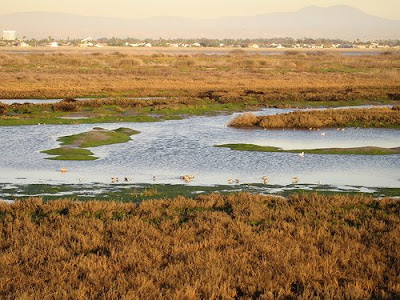
(Photo of Bolsa Chica wetlands restoration in California from Flickr and and photographer Mollivan Jon)


Weekly Angst: Add wetlands to the list if things that can cause global warming. Swamps and marshes are great carbon sinks, storing about 20% of the carbon and methane on the Earth’s land surface.

But as wetlands dry up from climate change, or are drained for development or agriculture, those greenhouse gases have the potential to do as much damage as industrial emissions. This was a topic of discussion and concern for 700 experts from 28 countries who met at last week’s 8th International Wetlands Conference in Brazil.

Wetlands hold some 770 billion metric tons of greenhouse gases, equal to what's now in the atmosphere. And emissions from wetland have the potential to negate all other steps to stop global warming if we don’t act to preserve these places so essential to the planet’s health.

Bad image
Wetlands get little respect. They have long been seen as useless and yucky, interfering with development, farming and other civilized things. So about 60% of wetlands across the world have been destroyed in the last century. Europe drained 90% of its wetlands for farming, the U.S. has drained more than half of its, and the California coastal region destroyed about 95%.

We know wetlands serve as a habitat for wildlife. We also know that in coastal areas they can buffer against hurricanes. We learned that when Katrina devastated New Orleans. If only the wetlands had been left in place, the impact of the storm wouldn’t have been as great.

Wetlands serve as natural “horizontal levees,” that can prevent flooding by storing floodwater. The recent floods in the Midwest reminded scientists that the Mississippi River once could store 60 days of floodwater in its wetlands, where now it can only store 12 days’ worth.

Wetlands – which include marshes, swamps, river deltas, peat bogs, mangroves and river flood plains – produce 25% of the world’s food, purify water and recharge aquifers.

Some thawing of the Arctic wetlands permafrost is probably inevitable at this point, so efforts to stop draining wetlands in more temperate and tropical climates is essential – not to mention restoration.

Restoration
Some restoration projects are under way – in the Everglades and on the Louisiana coast, with each one costing upwards of $5 billion. But it’s much cheaper to preserve the existing wetlands than have to rebuild them, scientists remind us.

In Southern California, the recently restored Bolsa Chica wetlands are now bursting with birds and fish. The project cost $147 million and culminated 40 years of struggle between environmentalists and developers. Part of the problem was a duck blind constructed by hunters. Now the wetlands connect to the Pacific Ocean basin, as they should.

(Sources: ClimateWire, Greenwire, Reuters )

Monday, April 14, 2008

Flooding in Brazil, hailstorm in China

Xtreme Weather Watch: Unusually strong rains in Brazil have resulted in flooding that killed at least 34 and left close to 200,000 homeless. Livestock and crops were destroyed. Officials fear an onset of dengue fever as floods retreat leaving pools of water where mosquitoes will breed. (PlanetArk)

A freak half-hour hailstorm in Central China, with 60 mph wind gusts, has killed 5, injured at least 66, and destroyed more than 4,600 homes in central China. (PlanetArk)

Monday, April 07, 2008

Excessive snow this winter will lead to more flooding in Midwest and Northeast -- NOAA


(Photo of recent flooding in St. Louis from Flickr and Dave Thompson)

Xtreme Weather: The National Oceanic and Atmospheric Administration is predicting more of the deadly flooding we’ve seen in recent weeks in the Midwest. This winter has seen an unusual amount of snow, and as that snow melts, flooding is likely in the Mississippi, Ohio and Missouri river basins. Some relief will come to the parched Southeast. Atlanta’s reservoir, Lake Lanier, now 12-14 feet below normal, will be replenished this summer, as will Lake Okeechobee in Florida, the National Weather Service said. The long-term drought in the Southwest won’t be affected, however. (ClimateWire)

Sunday, February 17, 2008

Britain shows early signs of spring


Xtreme Weather Watch: In reaction to unseasonably warm winter weather, signs of spring are showing up early in Britain. January temperatures averaged 41.5 degrees Fahrenheit, more than 3 degrees above average. February 12 was the warmest ever for that date, at 65 degrees. Butterflies and ladybugs are taking wing, and tadpoles are starting to hatch. The danger, according to the Woodland Trust, is that a cold snap may come before the real spring arrives. (PlanetArk)
(Photo of ladybug courtesy of Flickr and nutmeg66/Rachel)


Some have sold their children in Afghanistan
because they weren’t able to care for them in the severe cold and snow that has plagued the country this winter. Others have had limbs amputated because of frostbite. The worst cold spell in decades has caused more than 750 deaths and damaged 40,000 homes. Snow has blocked roads and interrupted relief efforts and supplies. (PlanetArk)

Raleigh, N.C.’s, water supply is very low and may dry up by summer, as about half the state faces extreme drought. Other Southeast states are suffering the same conditions. (CNN)

Global climate change caused Bolivia’s disastrous flooding, the country’s prime minister said, and therefore the rich countries of the world should send aid. Rain-caused landslides ruptured water mains in the capitol, La Paz, and one city is surrounded by muddy water. The U.S. pledged $150,000 in aid. (AP)